Hackathon · BeaverHacks 2026, Oregon State · May 2026
SPOOT
The wearer at the centre, front at the top. The red mark is where a sound came from. Move your pointer: it is the sound. Tap near the ring: the tap is the sound.
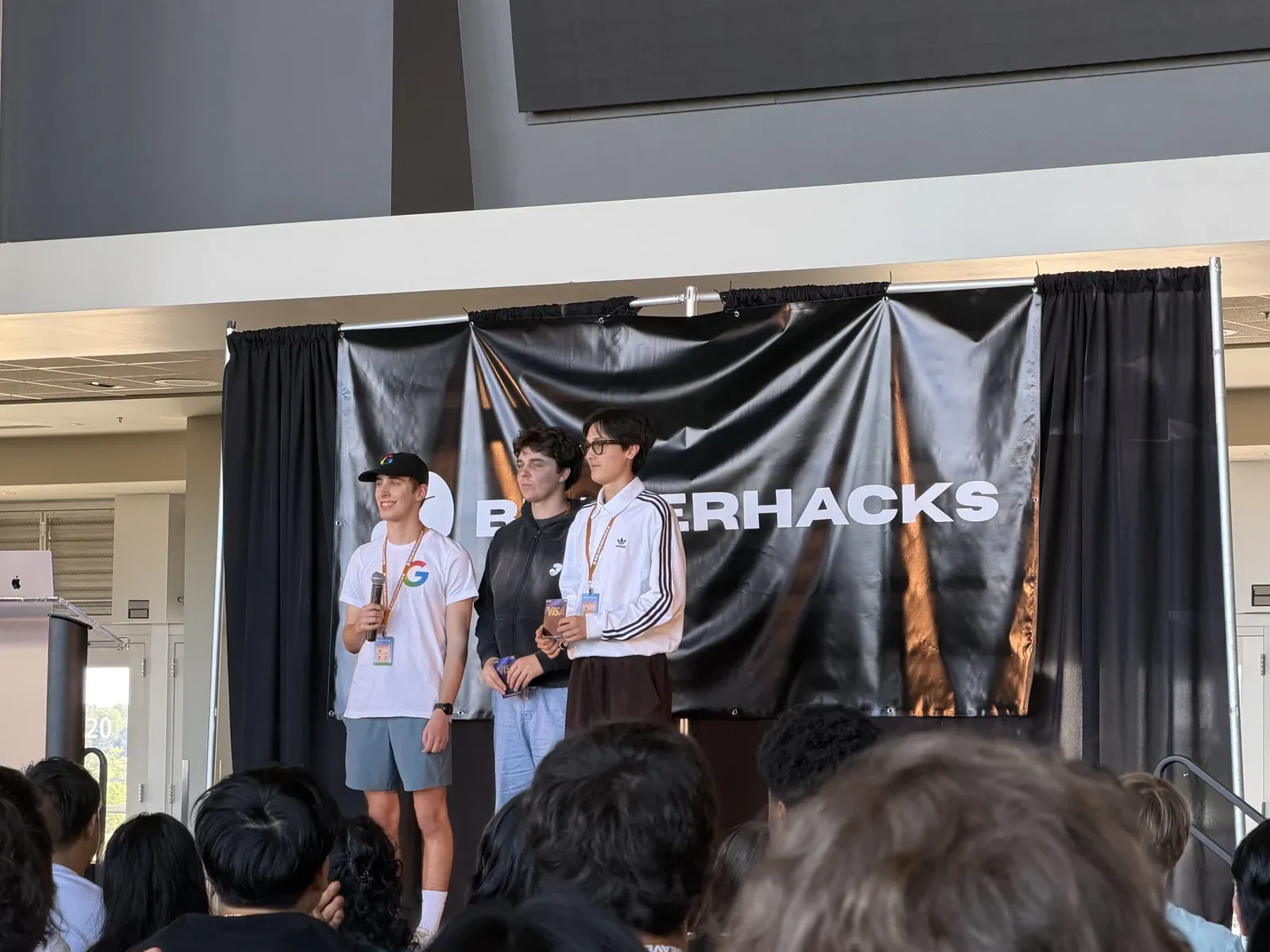
3rd place, Google — Best Use of Gemini
Glasses that show you where a sound came from.
Why
One ear, no direction
A friend of ours is deaf in one ear. He cannot tell where a sound is coming from, so he always turns the same way.
The idea is borrowed from video games, which draw a sound on the screen where it is. We wanted the same thing on a pair of glasses.
- A car on your right
- Someone calling you from behind
Three steps
How it hears
-
Hear
Microphones
The 3D-printed glasses come with a reSpeaker XVF3800, a USB array of four microphones, on a Raspberry Pi. On the Pi itself, Silero VAD picks out speech and faster-whisper transcribes it.
The glasses hardware and the Pi bring-up were my part.
Diagram. Four microphones in, text out, on the Pi. -
Ask
Direction
The array's direction-of-arrival reading is mapped to a bearing around the wearer. The transcript, the bearing and the volume go to Gemini Flash, which answers in JSON: how important the sound is, whether it was meant for you, and a message of eight words.
Carson built the mapping and the Gemini integration in the server.
Diagram. A bearing and a transcript in, a three-part answer out. -
Show
Display
The result shows in two places: on an I2C OLED HUD, and in an AR web app on the phone.
Carson built the HUD. The phone AR layer was mine.
Diagram. One result, two screens.
See it running: the demo video (opens in a new tab) On Carson Secrest's YouTube channel.
The award
3rd place in Google's Best Use of Gemini
SPOOT placed 3rd in Google's Best Use of Gemini track at BeaverHacks 2026, held at Oregon State on May 2-3, 2026. The clip walks from the tables up to the stage.

Credits
A team of two
Who built what, as the repository README splits it.
- Jakhangir Tynshimov
-
- Phone AR layer
- 3D-printed glasses hardware
- Raspberry Pi bring-up
- Carson Secrest
-
- OLED HUD
- Gemini integration in the server
- Direction-of-arrival mapping
Built with
reSpeaker XVF3800 · Raspberry Pi · Silero VAD · faster-whisper · Gemini Flash · I2C OLED · phone AR web app