Hackathon · QuackHacks 3, University of Oregon · May 2026
TouchPoint
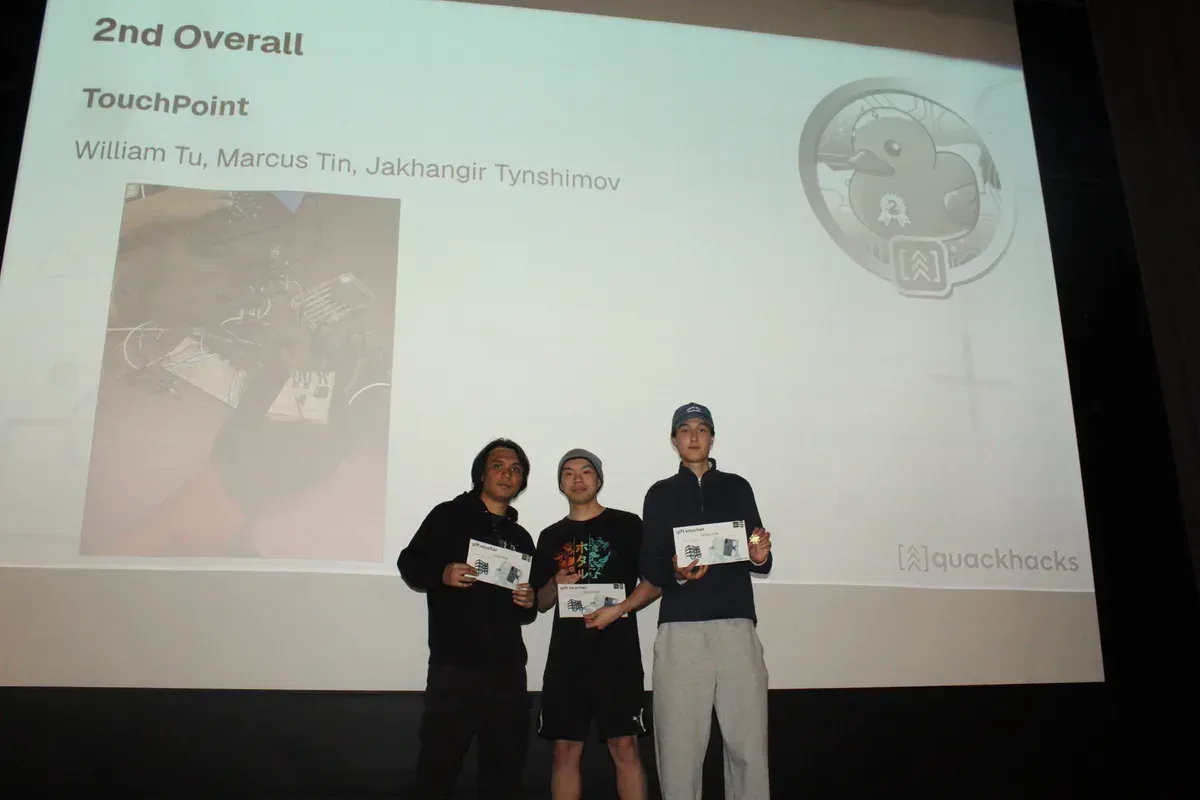
2nd place overall of 71 teams, 250+ hackers
A pair of gloves that plays Braille on the fingertips, so a blind user can browse the web by touch. Built in 24 hours by a team of three.
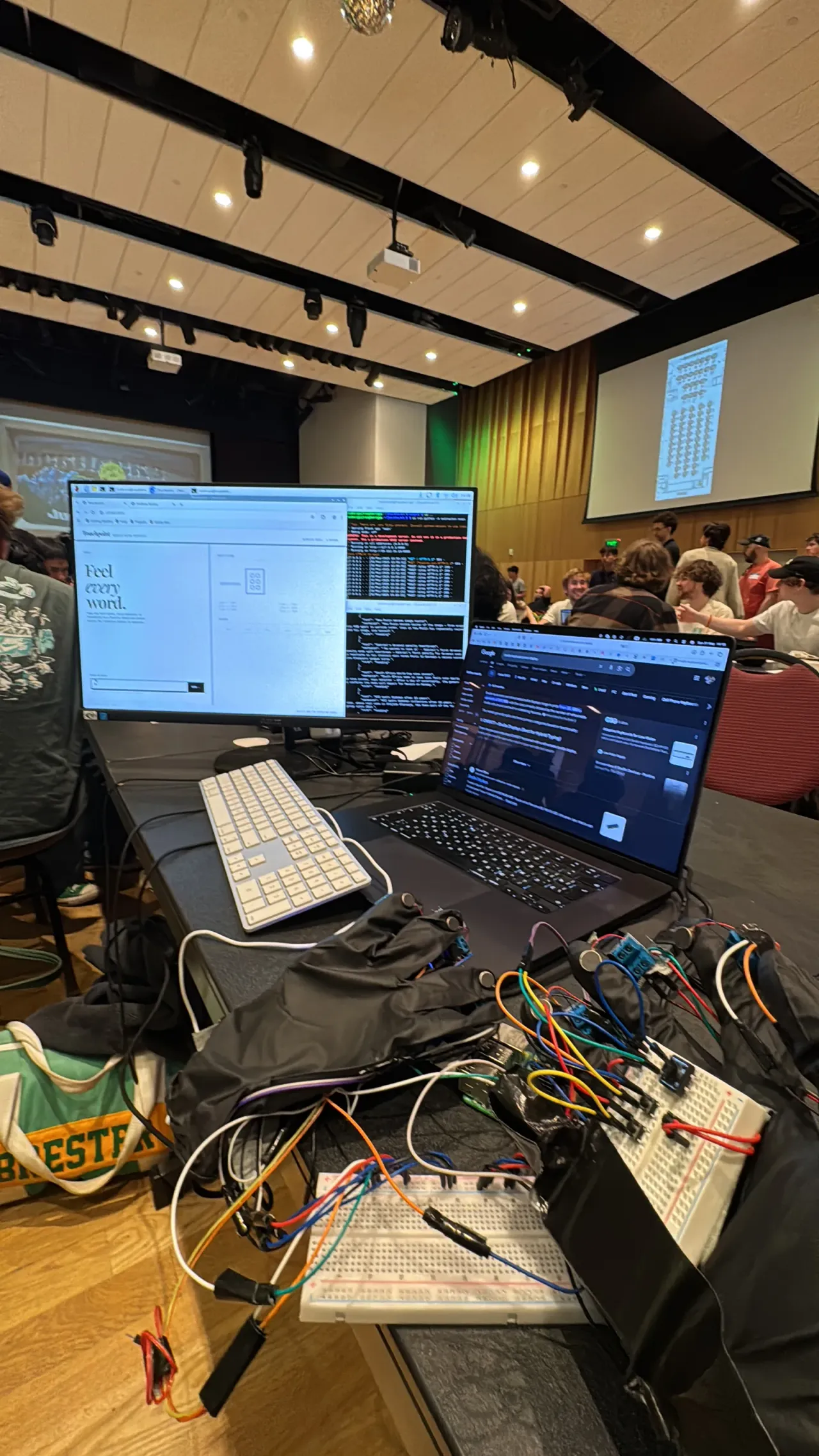
How do you read the web when you can't see the screen?
People who are blind rely on screen readers, and screen readers rely on hearing. With age, hearing goes too, and the fallback is a refreshable braille display: hardware that starts around $2,000. For a lot of the people who need one, that puts the internet out of reach.
We searched for a cheaper device that did the same job and could not find one, so we built the smallest thing that could: not a braille display, but a way to feel the structure of a page and read it one word at a time.
The driver board
One sheet, eight motors, five keys
My part of the 24 hours: the board between the Pi and the hands. The schematic below is the one I drew at the event; its title block carries my handle.
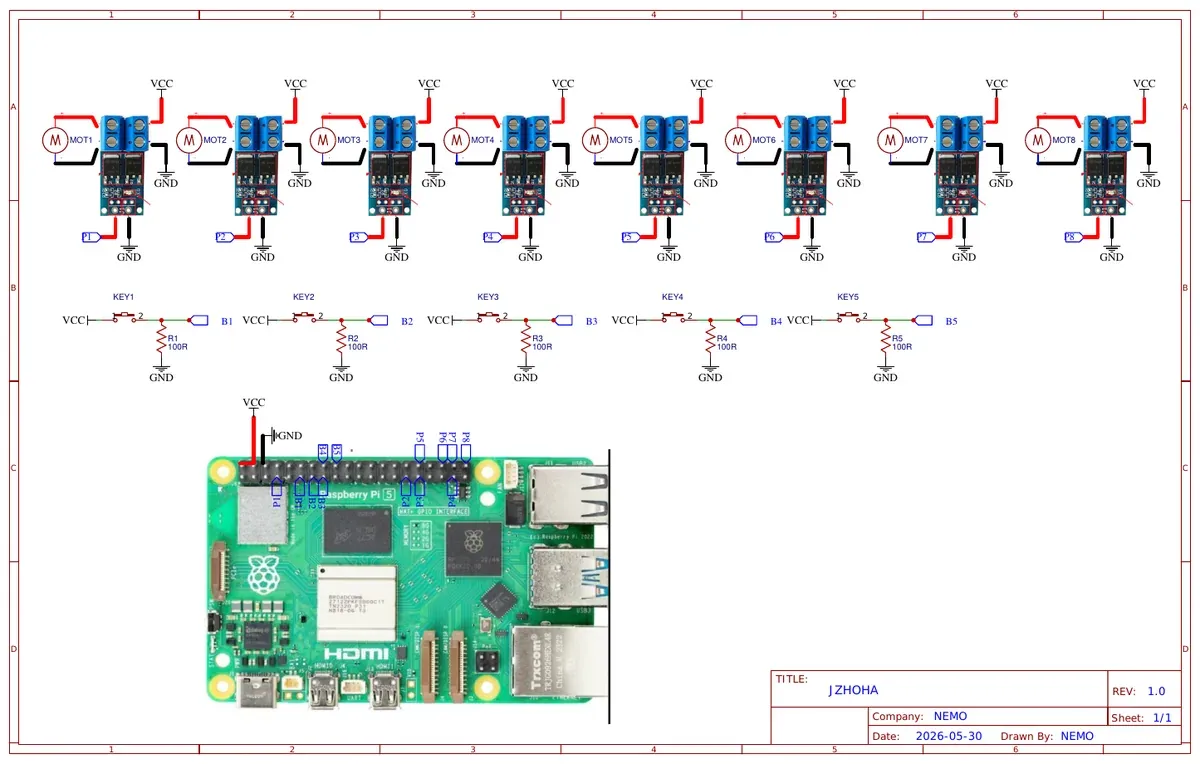
- Eight motor channels. MOT1 to MOT8: a MOSFET module per vibration motor, switched from the Pi's GPIO. Six of them drive the fingertips, three per hand.
- Five keys. KEY1 to KEY5, the thumb joystick and its buttons, each on its own input with a 100 Ω resistor to ground.
- Raspberry Pi 5. P1 to P8 out to the drivers and B1 to B5 in from the keys, on one header.
- One supply. A single VCC and ground rail feeds the drivers, the keys and the Pi.
What does a page feel like?
We stopped trying to reproduce a braille display and asked what the minimum sense of touch is. What someone navigating a page needs first is structure: where am I, what is next to me, what is one level down.
So the page becomes a tree. A Playwright and Gemini extractor fetches it, strips it to its skeleton and summarises each branch. The fingers receive: six vibration motors, three on each hand, play the current word in Grade 1 Braille. The thumb navigates: a joystick and buttons under the right palm move up and down through siblings and in and out through depth.
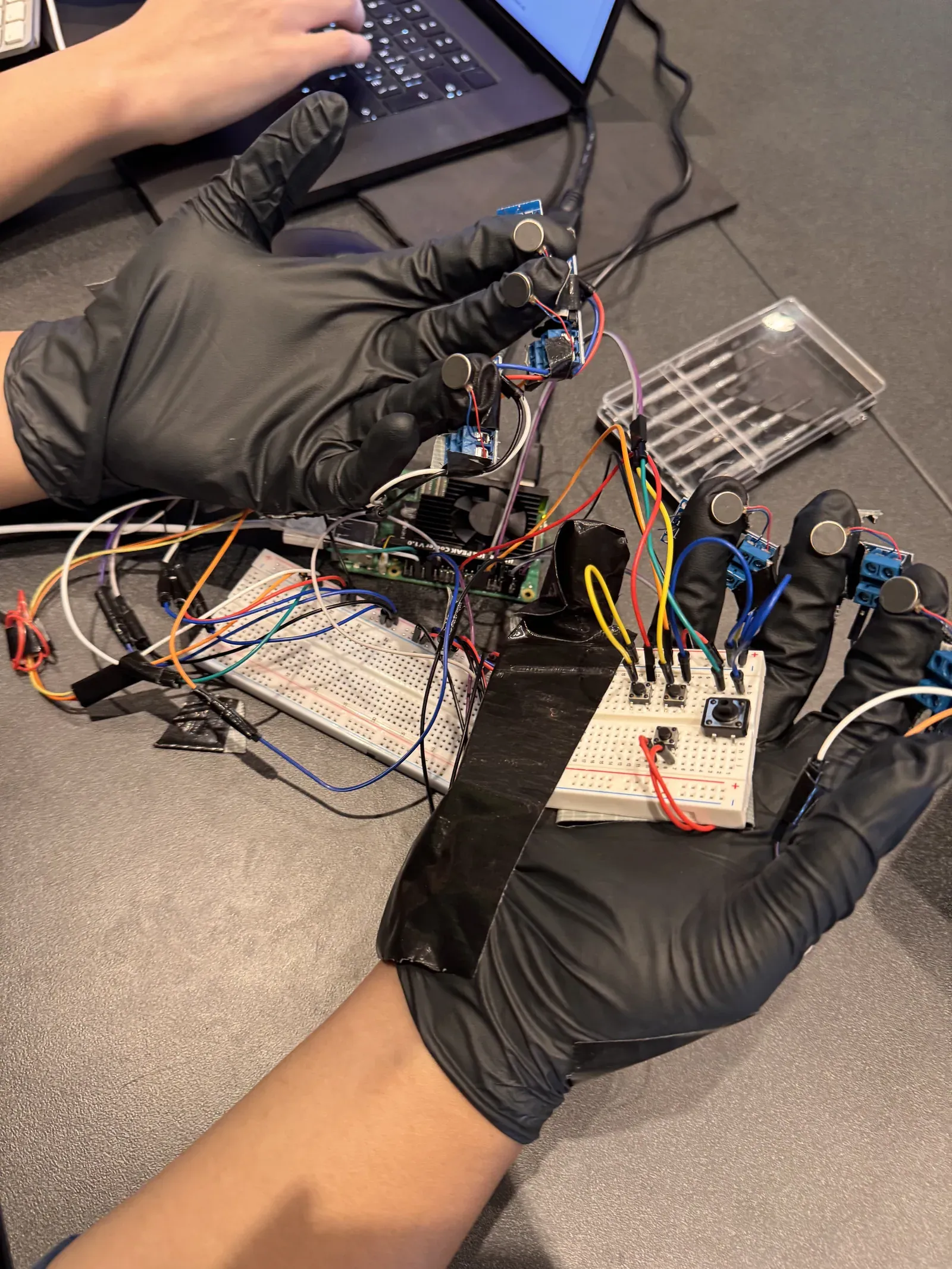
Twenty-four hours, in four frames
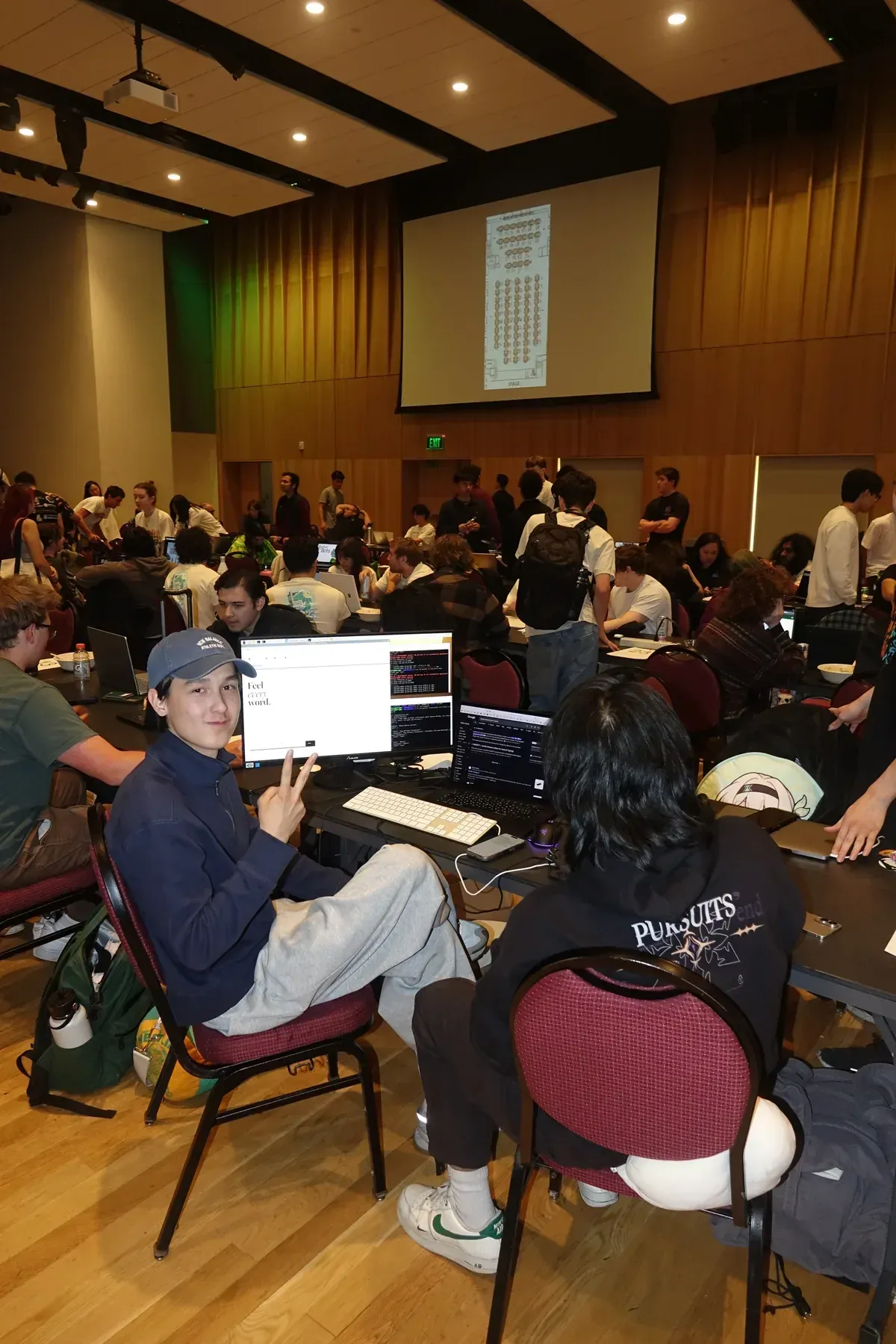
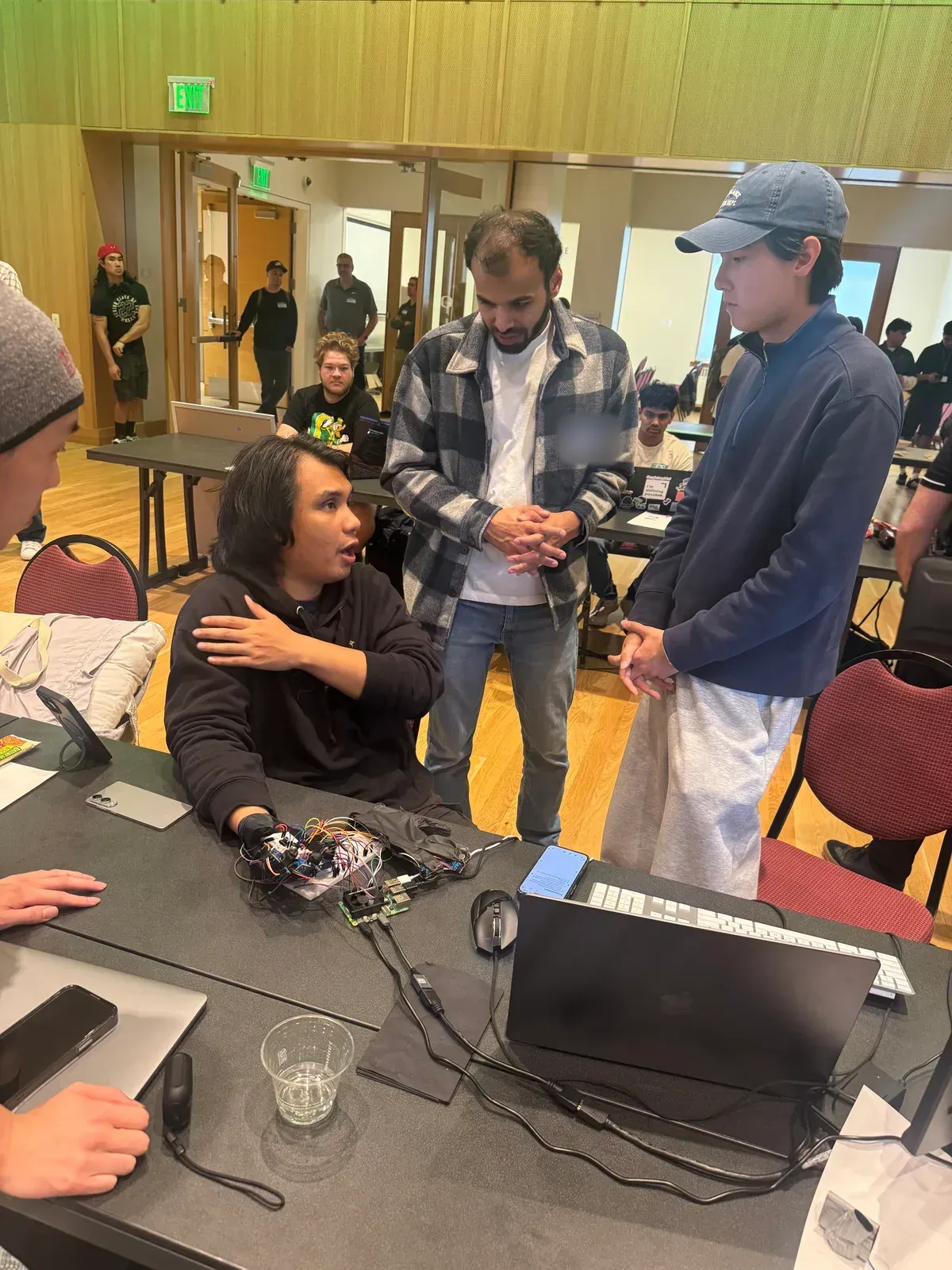
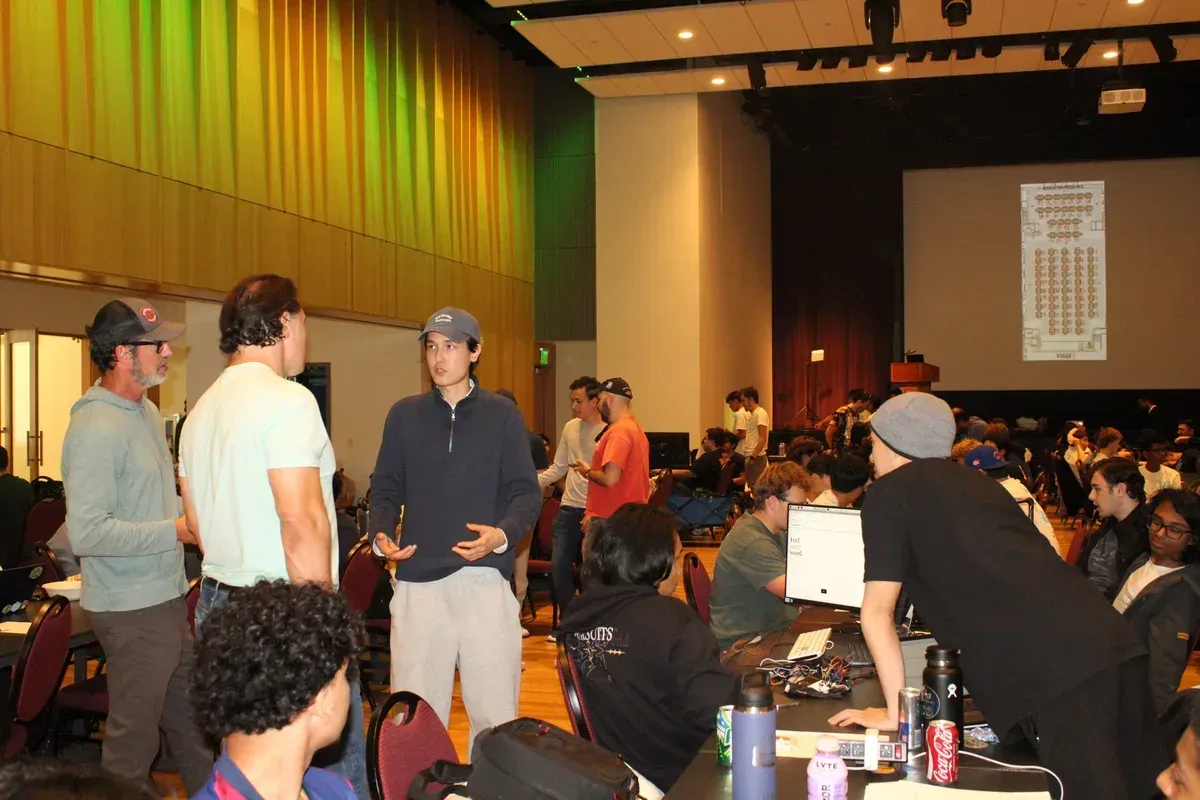
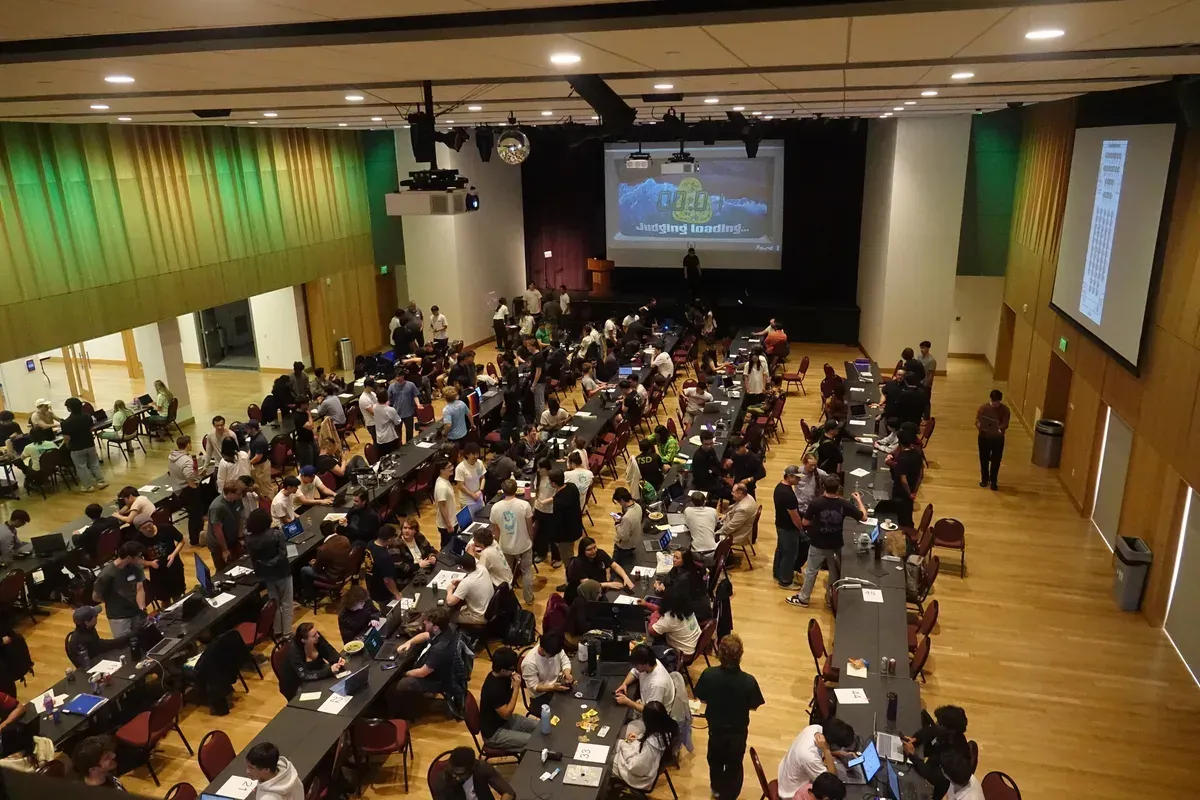
Did it work?
TouchPoint placed 2nd overall of 71 teams at QuackHacks 3, a 24-hour hackathon at the University of Oregon with more than 250 participants. Engineers from Google stopped at our table to work through the interaction model with us.
The honest limit: this is a 24-hour prototype that shows the navigation model can be learned. It is not a product yet, and the next question is whether the tree still holds on a page with a thousand nodes.