Hackathon · HackPrinceton Fall '26, Princeton University · November 2026
Atlas Blend
Spotify Blend for art. You heart the paintings you like, blend your taste with a friend's, and watch a new piece get painted for the two of you. Built in 36 hours by a team of four.
Nobody knows their friends' taste in art
Everyone knows what music their friends like. Spotify Blend turned listening into something you compare and argue about. Art has nothing like it: the works are spread across museums, the one near you was not hung with you in mind, and most people could not say what their own taste is.
We wanted the quiz feeling of "that is so you" and the Blend feeling of "we both like this", for paintings, across many collections at once.
What it does
Five steps, three taps to your own wall
-
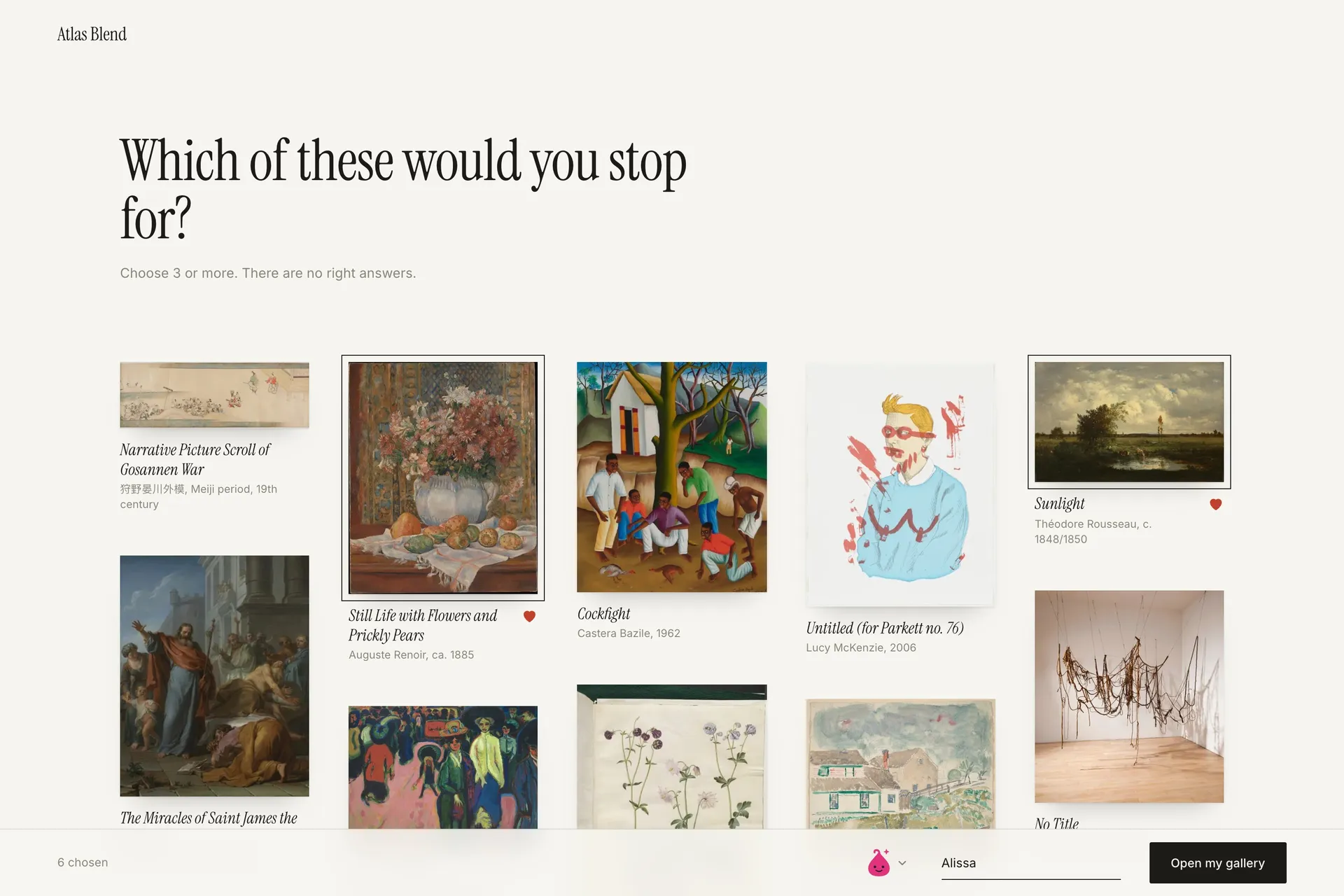
Pick what you like
One work from each of 31 visual families: ukiyo-e prints, Indian miniatures, Fauve landscapes, geometric abstraction. Tap a few; it takes about fifteen seconds.
-
Get a wall made for you
Twelve works chosen for you, each saying which of your hearts it came from. Heart more and the wall rehangs.
-
Meet your curator
An agent that keeps notes on you, writes a portrait of your taste, asks easy questions and hangs whole rooms. Tell it what you dislike and it remembers.
-
Blend with a friend
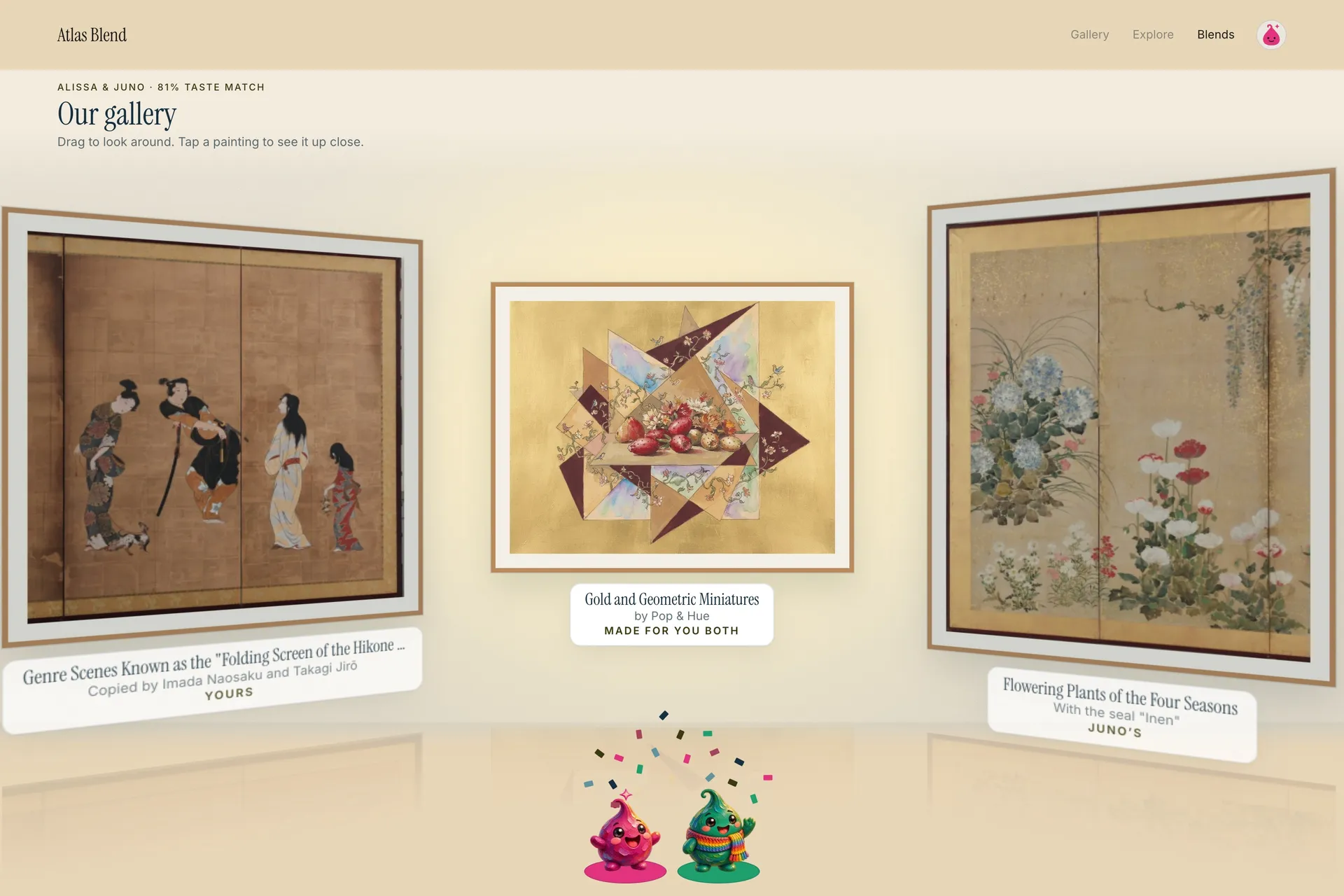
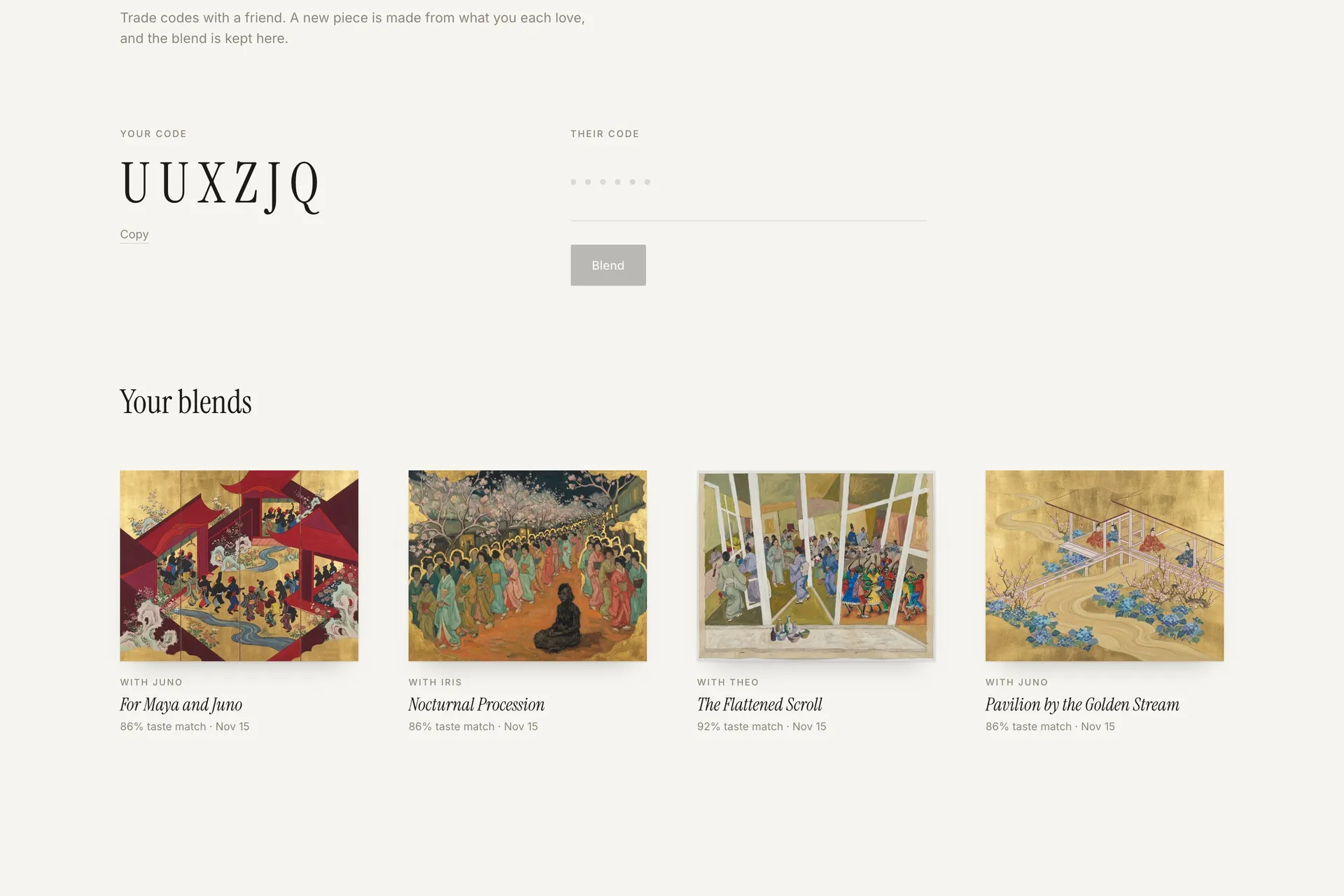
A match score, each person's leanings, and a shared wall: what you both hearted, what of theirs you would like, and what sits between you.
-
Watch your piece get painted
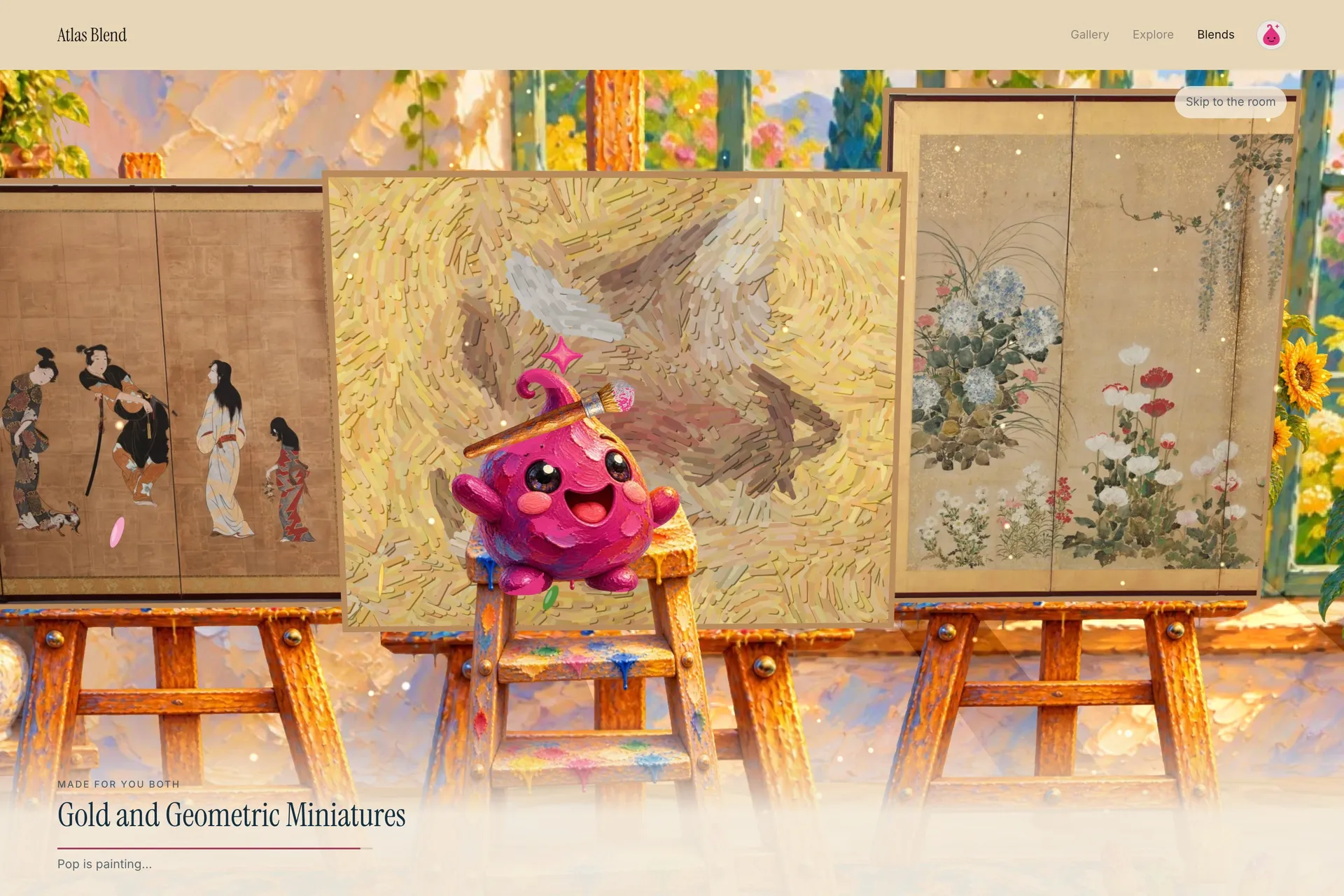
Every blend commissions a new painting from both tastes. Your painter paints it stroke by stroke while a wall label says what it took from each of you.
The taste engine
Taste is plural
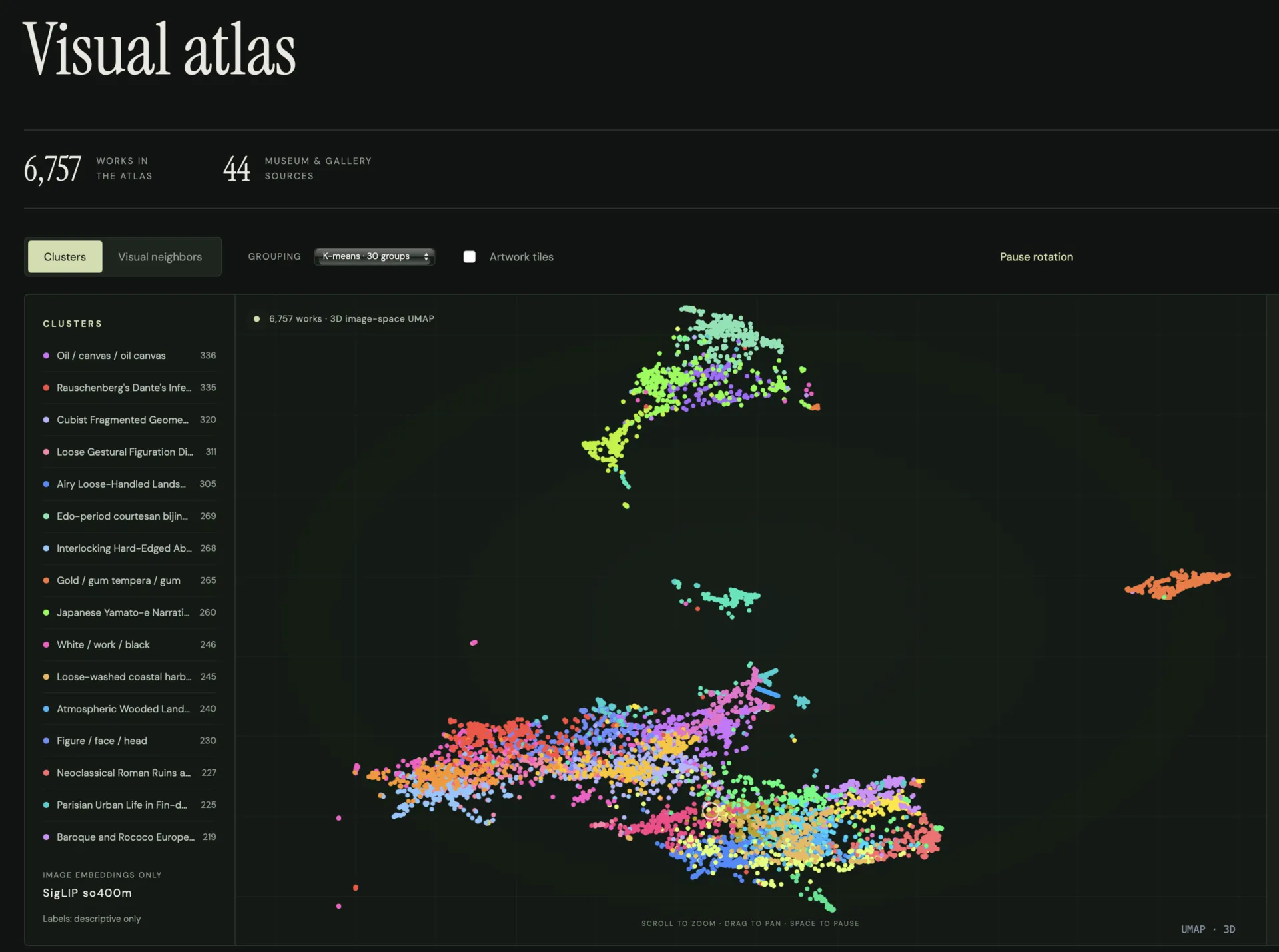
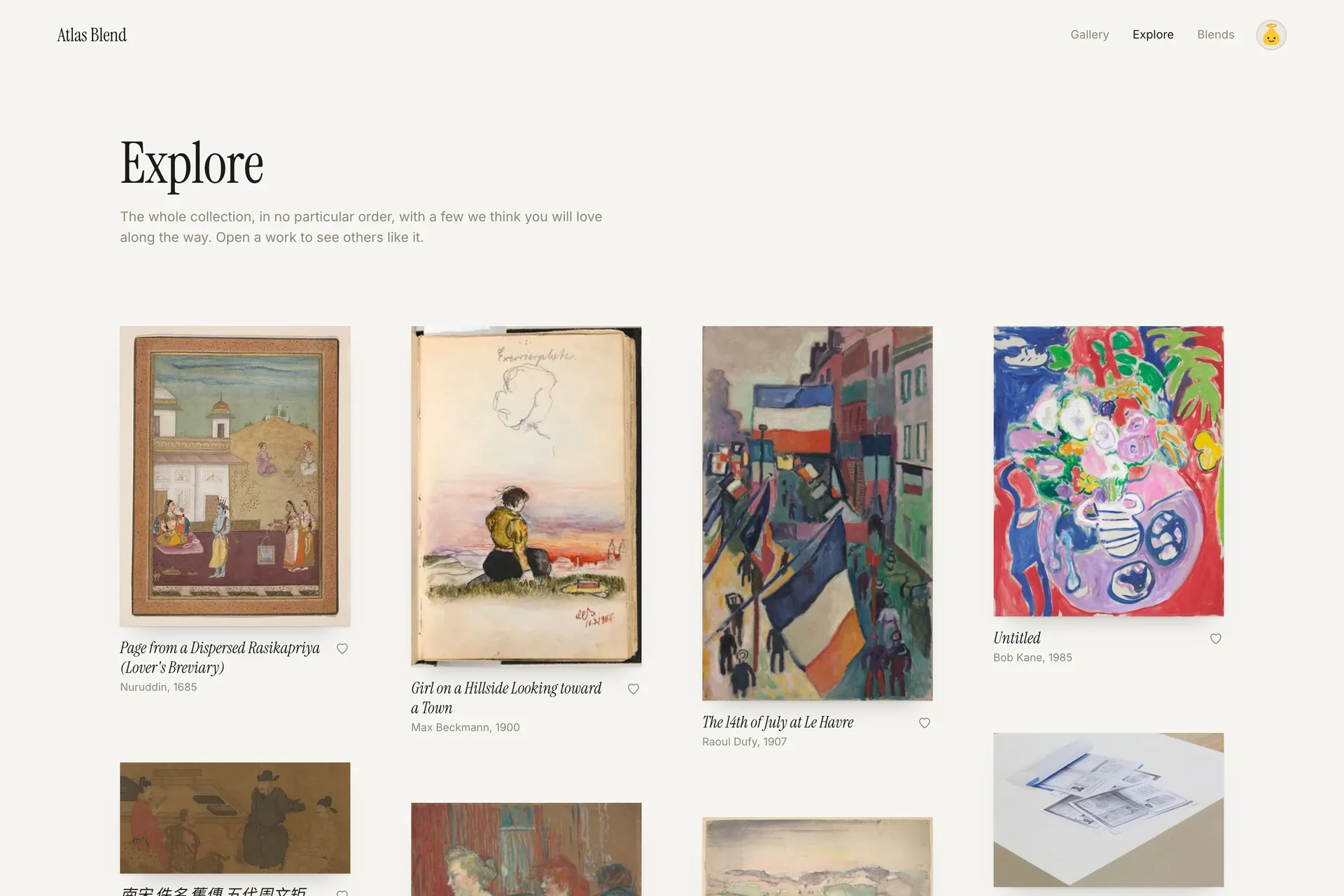
Every work in the collection, 6,757 of them from more than forty museums and galleries, is embedded with SigLIP 2. The whole set is small enough to score exactly, in memory, on every request: the team measured about 0.1 s for a wall and 0.2 s for a blend.
A person is not one average vector. Averaging made everyone a 93% match, because averaged embeddings drift to the middle of the collection. So each person's hearts are split into up to twelve separate tastes, each anchored on a real artwork. A blend scores every work by the lower of its closeness to the two of you, across every pairing of your tastes, so it rewards what you would both like over what one of you loves.
Two deep agents
A curator that remembers, an atelier that paints
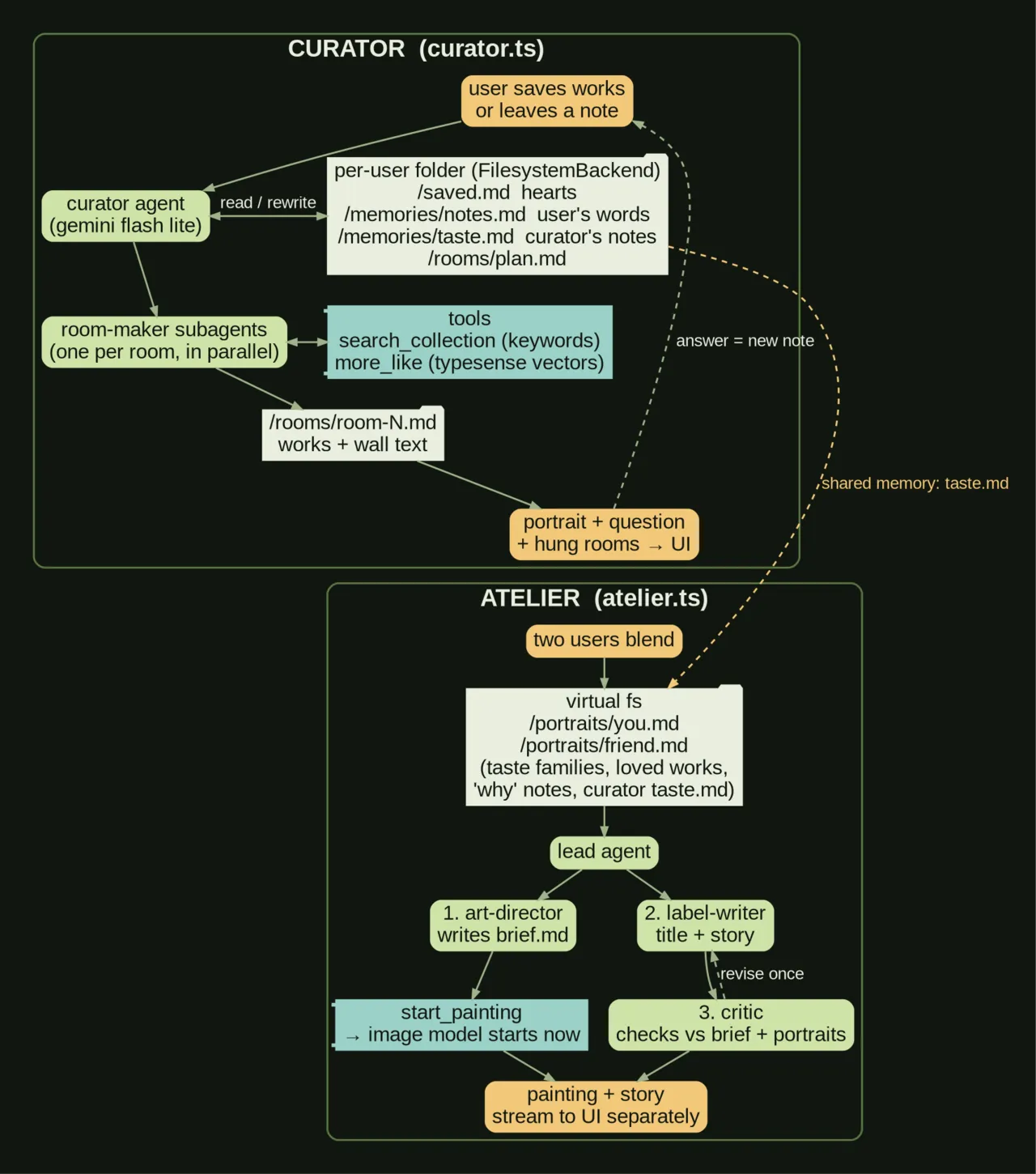
Both run on LangChain's deepagents with Gemini. The curator keeps a folder of notes per person, rewrites its own portrait of their taste, and hands rooms to room-maker subagents that search the collection by words and by look.
The atelier takes a blend: an art director writes the painting brief and starts the image model the moment the brief exists, a label writer writes the title and story, and a critic checks that each person is credited only with what their taste supports.
My part
The studio you walk into
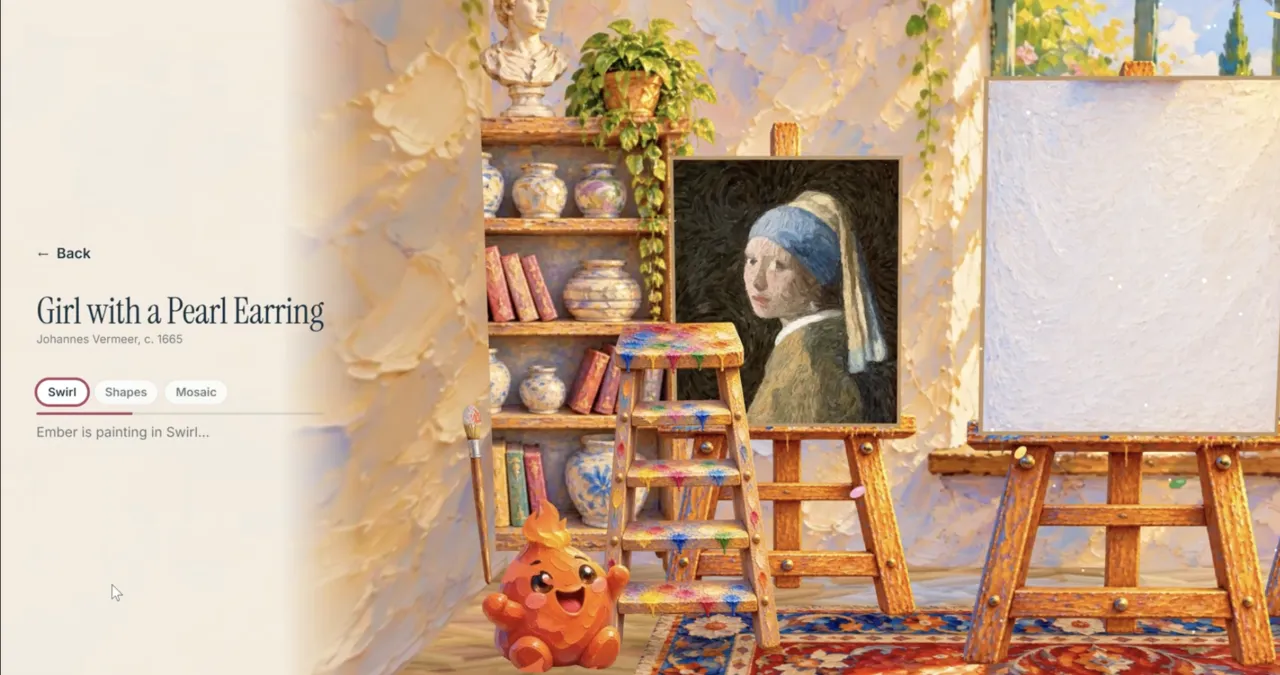
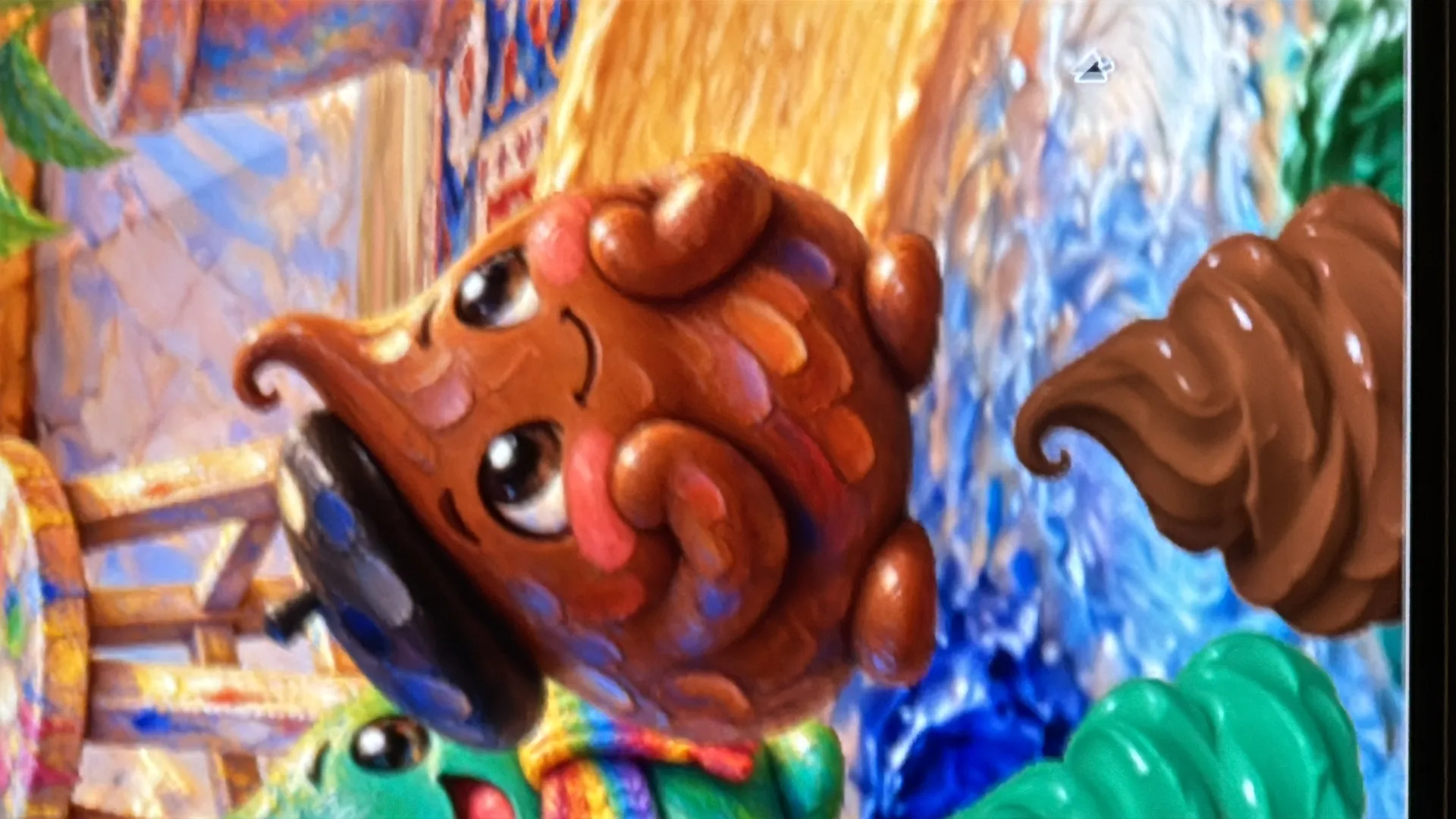
I built the painted studio the app opens in, in three.js. It is a 2.5D diorama: every piece is a painted cutout standing at its own depth, so the moving camera gives real parallax. On arrival the camera comes down from the upper corner while the room unfolds like a pop-up book, each piece landing a little past its place and settling back, and then the painters are painted onto the palette stroke by stroke by a shader that reveals them along their brush order. After that they breathe, blink and hop, and you pick yours by tapping it.
The same room is where a blend gets painted: the cast stands on the floor and paints the commissioned piece on an easel's canvas. Before the team settled on the final gallery, I also built the first two-player version, with room codes, a shared canvas and a wall of saved paintings; the final app replaced it with the gallery and kept the studio as its entrance. I merged the museum look and the studio entrance into the submitted app and made its icon, Ember, from the painters' artwork.
What was hard
Everyone was a 93% match
The first profile averaged a person's hearts, and any two people came out nearly identical. Splitting taste into several anchored clusters, and recalibrating the score against measured similarities, made the number mean something.
Agents are slow, a reveal can't be
A full agent run takes about fifteen seconds. The brief goes to the image model as soon as it is written, the blend itself answers at once, and the screen paints a preview while the real piece is made.
A pivot on day one
We started the weekend repainting museum paintings in new styles and switched to taste and blending on the first day. The painting engine survived the pivot and became the reveal.
The app, in four frames
Where it stands
Atlas Blend was submitted to HackPrinceton Fall '26. It is a 36-hour prototype, and its agents still take seconds that the painting covers rather than removes.